
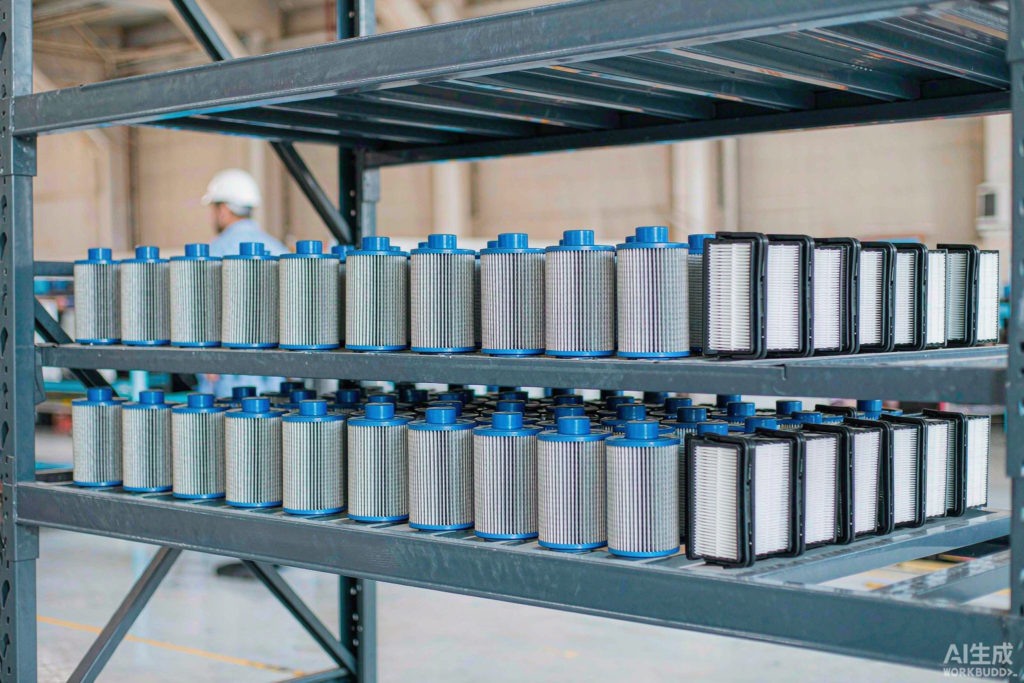
The automotive filter market entered 2026 with unusual momentum. Global automotive filtration system sales are projected at roughly USD 41.3 billion for the year, growing nearly 5.9% — the steepest pace in three years. Behind that single number, five structural shifts are redrawing the product mix, the supplier scorecard, and the sourcing playbook for importers and distributors. This article breaks down what changed, why it matters, and what buyers should stock for the next 24 months.
1. Electrification Changes the Mix — Not the Total Demand
Battery-electric vehicles remove the oil and fuel filters from a vehicle, but they do not remove filtration. EV cabins are unusually sensitive to air quality because there is no engine noise to mask discomfort, so HVAC systems now specify high-efficiency cabin filters. Industry analysis shows traditional oil-filter volumes could soften by as much as 20% in EV-heavy markets, while cabin air filtration demand rises about 15% over the same window.
The cushion is the installed base. Internal-combustion vehicles will remain the majority of the global parc through 2036, and aftermarket replacement demand is structurally independent of new-vehicle production. For importers, the takeaway is to keep ICE filter programs running while adding EV-ready cabin filter SKUs. See our cabin air filter selection guide for spec details.
2. Euro 7 and the PN10 Threshold Push Nanofiber Mainstream
The EU’s Euro 7 regulation takes effect for new passenger cars and vans from 29 November 2026, with heavy-duty vehicles following in 2027–2028. Its defining technical move is lowering the solid particle-number limit from 23 nm (PN23) to 10 nm (PN10). Capturing particles that small with conventional cellulose paper chokes airflow and raises fuel consumption, so OEMs and tier-one suppliers are accelerating electrospun nanofiber composite media.
For B2B buyers, nanofiber is now a procurement criterion, not a nice-to-have. Verify ISO 5011 fractional separation efficiency for sub-micron particles and confirm a nanofiber layer is present before specifying — it protects MAF sensors and high-pressure injectors and lowers total cost of ownership across a fleet.
3. Cabin Air Filters Are the Fastest-Growing Segment
Cabin air filtration is the standout. It is the fastest-growing slice of the market in 2026 (up about 11.3% year on year), driven by mandatory in-cabin air-quality rules — China requires PM2.5 filtration efficiency of at least 99%, the EU at least 95% — and a consumer shift toward HEPA-grade, activated-carbon, and antimicrobial media. Replacement cycles are also shortening from 24–36 months to 12–18 months in several regions.
That combination — higher spec, higher frequency — makes cabin filters a recurring-revenue anchor for distributors. Our cabin filter product range covers particulate, carbon, and HEPA variants for passenger and commercial fleets.
4. Synthetic and Sustainable Media Replace Paper
Nonwoven synthetic media — meltblown, spunbond, nanofiber — already account for an estimated 55–65% of filter-material value, decisively displacing cellulose paper. Sustainability is the next axis: bio-based lignin impregnation is cutting fossil-resin use, and OEM forward-sourcing programs now ask for 20–30% recycled fiber content. Suppliers that can document certified recycled or compostable media gain preferential access to European and Asian OEM programs.
5. The Aftermarket and E-commerce Channels Accelerate
Independent aftermarket (IAM) growth is outpacing OEM. Fleet replacement cycles are shortening, and e-commerce penetration in filter sales has climbed from about 18% to 31% since 2023, letting cost-competitive Asian manufacturers reach replacement demand directly. For distributors, that means wider SKU availability, faster reordering, and more pressure to prove quality through certification rather than shelf position.
What This Means for Importers and Distributors
Five moves separate the buyers who benefit from these shifts from those who get squeezed:
- Diversify the mix. Keep oil and fuel filter programs, but add EV-ready cabin and thermal-management filters.
- Specify nanofiber for PN10 compliance. Make ISO 5011 sub-micron efficiency a line item in every RFQ.
- Demand certified quality. IATF 16949, independent particle-capture testing, and clear cross-reference data are now table stakes.
- Choose OEM/ODM partners, not just vendors. Private-label, custom packaging, and free samples de-risk your brand launch.
- Plan for shorter cabin-filter cycles. Stock deeper on cabin SKUs; the replacement cadence is accelerating.
HONG WU FILTER manufactures oil, air, fuel, cabin, and transmission filters under IATF 16949, with full OEM/ODM private-label service and free samples for qualified importers. Explore our oil filter catalog or oil filter buying guide to start a sourcing conversation.
Frequently Asked Questions
Will EV adoption kill the oil filter market?
No. Internal-combustion vehicles remain the majority of the global fleet through 2036, and aftermarket replacement demand is independent of new-vehicle production. The opportunity shifts toward cabin and thermal-management filtration rather than disappearing.
What is Euro 7 and when does it apply?
Euro 7 is the EU emissions standard effective 29 November 2026 for new cars and vans, with heavy-duty vehicles in 2027–2028. It tightens the particle limit to PN10 (10 nm), driving adoption of nanofiber filter media.
Which filter segment is growing fastest in 2026?
Cabin air filters — up roughly 11.3% year on year — led by HEPA, activated-carbon, and antimicrobial media plus shortening replacement cycles.
How should importers choose a filter supplier in 2026?
Verify IATF 16949 certification, ISO 5011 sub-micron efficiency data, nanofiber capability, OEM/ODM private-label support, and documented sustainable-material options.